Volio
VolioRestaurant POS system cost: the full monthly bill
A restaurant POS costs software, hardware, card fees and add-ons. Published prices from Square, Toast and Lightspeed, and how to add up your own.
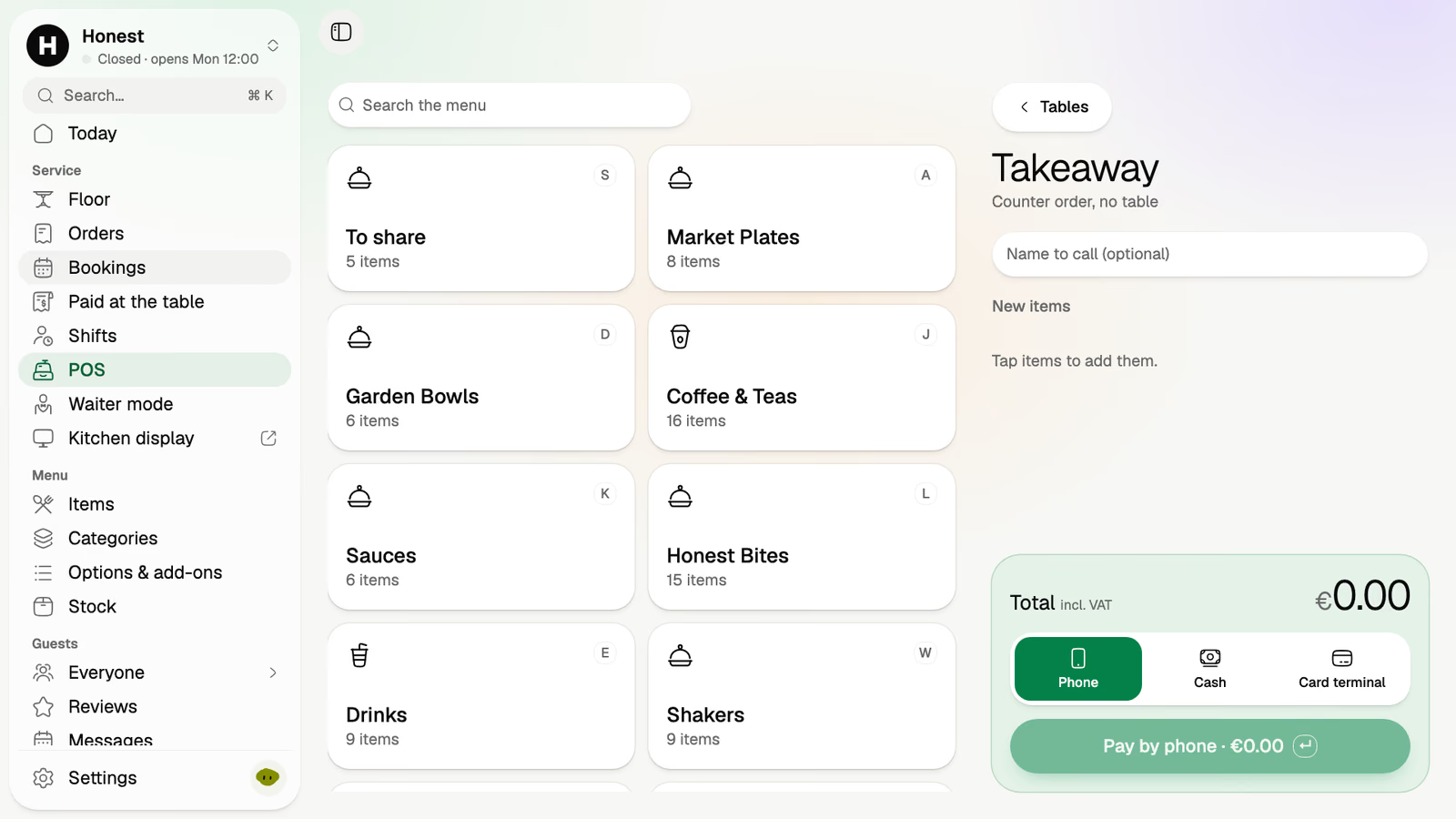
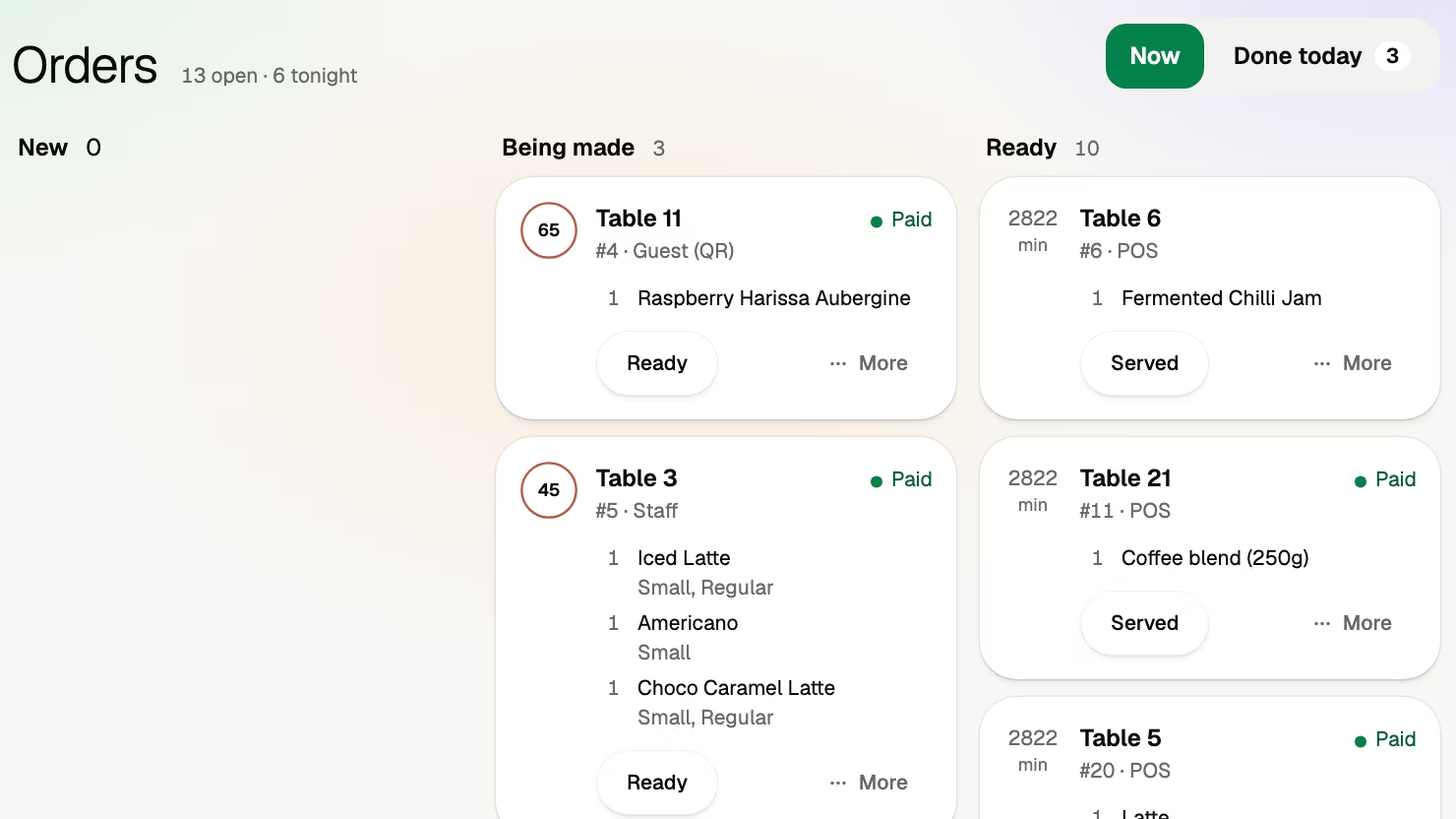
A restaurant POS bill has four lines: software each month, hardware once or on a lease, a card fee on every sale, and add-ons priced per device or per feature. Square’s US plans, for example, are $0, $49 and $149 per location a month, and each kitchen screen adds $20 to $30 on the paid plans. The add-ons are where two quotes that look alike part ways, so price your real setup: how many screens, how many staff, which extras.
The prices below come from each vendor’s own page as of October 2026, in the currency published. The same four lines apply to Volio’s POS, and to the choice between a new system and a POS beside the till you already have.
The four lines on a POS bill
- Software. A monthly fee, usually per location. This is the number on the pricing page.
- Hardware. Terminals, stands, printers, kitchen screens. Bought once, leased, or skipped if the POS runs on devices you own.
- Card fees. A percentage plus a fixed amount on every card payment, set by whoever processes the cards.
- Add-ons. Kitchen screens, kiosks, loyalty, bookings, online ordering, staff tools. Often priced per device or per person.
Published software prices
| Vendor | Software | Hardware | In-person card fee | Terms |
|---|---|---|---|---|
| Square (US) | Free $0, Plus $49, Premium $149 per location a month | Optional; sold from $59 | 2.6%, 2.5% or 2.4% + 15¢, by plan | 30-day trial on paid plans, “cancel or switch plans anytime” |
| Toast (US) | Starter Kit “starting at” $0, Point of Sale “starting at” $69 a month | First terminal subscription included; later devices cost extra | Not published | A term set in your order, yearly renewal, an early termination fee |
| Lightspeed (US page) | 69, 189 or 399 USD; the page shows no billing period | Sold by quote | Not published | Not published |
| Clover (US) | Starter $179, Standard $239, Advanced $354 a month for 36 months | In the bundle | 2.3% + 10¢ | Priced over 36 months, or buy the hardware up front |
| Loyverse | Free POS; add-ons €5 to €25 a month | None required | Not on its pricing page | Add or cancel add-ons anytime |
Two of those cells in the vendor’s own words. Toast’s plans say: “Pricing includes first hardware terminal subscription. Additional charges apply for subsequent devices.” Its Merchant Agreement, last updated on 10 September 2025, sets the early termination fee as the software fees left in the current term, or for a Pay-as-you-go subscription “one-hundred and fifty dollars ($150.00) multiplied by the number of months remaining in the then-current Term”. The agreement renews “for successive one (1) year periods”. Read the term in your own order before you sign. Lightspeed’s pricing page adds: “Prices may vary depending on the nature of the business and the industry.”
The money also buys things a small system does not have. Toast’s plans list “24/7/365 support”, installation and an offline mode, and Toast sells delivery services and payroll. Square sells its own hardware and payroll, and its plans include pickup and local delivery. Lightspeed lists an offline mode and 24/7 support on its pricing page. If you need those, count them in. For UK and Irish prices side by side, see Toast alternatives in the UK and Ireland.
Hardware: buy, lease or use what you own
Square publishes its US hardware prices: the reader is $59, the Stand for an iPad $149, the Terminal $299, the Handheld $399 and the Register $899, or $44 a month over 24 months. A kitchen touchscreen from its shop is $699 to $899.
Clover folds hardware into the plan. Starter at $179 a month for 36 months comes to $6,444. The other route, $1,799 up front plus $89.95 a month, comes to $5,037.20 over the same 36 months.
Toast says its upfront costs are “hardware and implementation, which vary depending on your specific hardware packages and installation needs”. Lightspeed sells its hardware kit by quote, with no price on the page.
Add-ons that can double the bill
Take Square Plus at $49 a month. A kitchen and a bar need two kitchen screens at $30 each, which makes $109. Add one self-order kiosk at $50 and the month is $159, more than three times the plan price, before a single card fee.
Other vendors count differently:
- Lightspeed charges $30 per kitchen screen a month on every plan. Reservations, gift cards and delivery integrations are add-ons without published prices.
- Loyverse has no monthly fee for the POS, and employee management is €5 a month per employee. Eight staff are €40. Add advanced inventory at €25 per store and sales history beyond 31 days at €5 per store, and the free POS is €70 a month before taxes.
- Toast marks some features on its plan chart “Available with add-on; additional fees may apply”. The prices are not published, so ask for each one in writing.
The kitchen display cost guide has the per-screen sums, and the QR ordering cost guide covers the fees on orders from the table.
Add up your own month
Fill in five rows with the vendor’s numbers and your own counts:
- Plan price × number of locations.
- Screens (kitchen, bar, kiosk) × price per device.
- Staff × price per person, if staff are charged.
- Extras: loyalty, bookings, online ordering, gift cards.
- Card sales × the percentage, plus the number of card payments × the fixed fee.
Do not skip row 5. An example with made-up volumes, at Square’s published US rates: $30,000 of in-person card sales in 1,500 payments on Square Free is $780 plus $225, so $1,005 in fees. On Premium the same sales cost $720 plus $225 plus the $149 plan: $1,094. On fees alone, the lower rate did not pay for the higher plan at that volume. Run your own figures, and compare card rates only when both vendors publish them.
Then two things the monthly sum leaves out: the hardware, divided by the months you expect to keep it, and the contract. Ask how long the term is, how it renews, and what leaving early costs.
What Volio costs
Volio has three plans, each priced per venue per month: see the plans and prices. Every plan has unlimited tables, staff, phones and screens, so rows 2 and 3 of the worksheet are zero. Row 4 depends on the plan: bookings, loyalty and gift cards are in Essential, not in Basic. There are 30 days of Pro free (a card is needed, cancel any time), and paying yearly gives two months free. Prices differ by country. A venue that cancels keeps its QR menu online, free.
Card payments go to the venue’s own account with the payment provider, then to its bank. Volio takes a small fee on a bill paid by phone. Guests see it before they pay, or the venue switches to covering it. Nothing when a guest pays cash or the waiter.
Volio sells no hardware, so the tablets and the card terminal are yours to bring, and it promises no offline mode. If you want the terminals supplied, or card payments that work with the internet down, one of the vendors above fits better. Volio launched in October 2026.
Sources
Checked on 12 October 2026.
- Square, restaurant plans, fees and add-ons: squareup.com/us/en/point-of-sale/restaurants/pricing
- Square, hardware: squareup.com/us/en/hardware
- Square, kitchen touchscreens: squareup.com/shop/hardware/us/en/products/kitchen-touchscreen-10 and kitchen-touchscreen-22
- Toast, pricing: pos.toasttab.com/pricing
- Toast, Merchant Agreement: pos.toasttab.com/merchant-agreement
- Lightspeed Restaurant, pricing: lightspeedhq.com/pos/restaurant/pricing
- Lightspeed Restaurant, hardware: lightspeedhq.com/pos/restaurant/hardware
- Clover, restaurant pricing: clover.com/pricing/restaurant
- Loyverse, pricing: loyverse.com/pricing