Volio
VolioDo guests hate QR code menus? What surveys say
In a 2022 Technomic survey 88% of diners preferred paper menus. What they dislike is specific, and the small text and clumsy browsing can be fixed.
Most diners say they prefer paper. In Technomic’s 2022 survey of 1,000 people, 88% preferred a paper menu, and in Toast’s 2024 survey of 850 US adults, 81% chose a physical menu and 1% chose a QR code. What they object to is narrower than “the code”: taking the phone out as they sit down, and text too small to read. So keep paper on the table, make the QR menu a page built for a phone, and keep the code for what paper cannot do: photos, another language, and QR ordering for the guests who want it.
What the surveys found
Technomic, May 2022, 1,000 people, reported by Restaurant Business on 21 June 2022. 88% preferred paper menus over digital ones. The gap between generations was small: 86% of Gen Z, 82% of millennials and 95% of boomers. One point went the code’s way: 67% agreed QR menus are more sanitary than paper.
Toast, 16 September 2024, 850 US adults. 81% preferred a physical menu, and 90% of guests aged 55 and over. Only 1% favoured a QR code over other formats. Toast sells QR ordering itself.
Both surveys ask about reading a menu. Neither asks how guests feel about ordering or paying on a phone.
What guests dislike, in their words
The statements Technomic’s respondents agreed with:
- 66% don’t like having to pull out their phone as soon as they sit down.
- 57% said QR menus feel like a chore.
- 55% said they are hard to read and browse.
- 50% said the codes lessen the dining experience.
Toast asked for the least favourite thing about a QR code menu:
- 26% said the small text is hard to read on a phone.
- 20% were frustrated at having to use their phone at all.
- 16% pointed to the technology being unreliable.
Asked what they liked, 20% said nothing.
Not wanting the phone out at dinner is a preference. No menu design answers it, and paper does. Small text and a code that fails are faults, and an owner can fix those.
A PDF on a phone is the part you can fix
Neither survey asked what the code opened. But the fixable complaints are about small text and awkward browsing, and that is what a menu laid out for paper does on a phone: the page shrinks to the width of the screen and the guest pinches and zooms. Scan your own code at table 7 on a Friday night and see which kind you have.
Each fault has a fix:
- Small text. A menu page built for a phone, with type you can read at arm’s length. QR code for a PDF menu explains when a file is still enough.
- Hard to browse. Categories, search and filters, so a guest gets to the mains in one tap. In Toast’s survey 66% preferred menus with photos of the dishes.
- A chore. The code opens the menu itself, with no app to download and no login.
- Unreliable. Test the code where the signal is worst. The Restaurant Business article calls “a strong internet connection and mobile-friendly menu design” prerequisites.
Keep paper and keep the code
The same article says “restaurants should always offer the option to look at a paper menu upon request.”
Go one step further and put paper on the table. Leave the code beside it for the guest who wants photos, their own language, or only the dishes without nuts.
The cost of running both is keeping them the same. A price changed on the phone and not on the card is an argument at the bill. Whatever you use, print the paper from the same menu the phone shows, and date each print run.
Where the phone helps: the bill
Nothing in these surveys says guests like paying by phone.
The closest peer-reviewed evidence is about a different device. Tan and Netessine studied a restaurant chain that put tabletop devices on its tables, and published the results in Management Science in 2020. They estimate that meal duration fell by close to 10% and sales per check rose by about 1%, and found that “the technology does not change the staffing level”. Those were the restaurant’s own devices on the table. The study says nothing about guests’ phones.
The Restaurant Business writer, who would also rather order from paper, noted that some chains were starting to use codes for faster payment and asked: “If more restaurants added that option, might guests warm up a little to the technology?” No survey here answers that. What an owner can see on any shift is the wait at the end, for the bill and then the card machine. A guest who can pay at the table from their phone skips that wait, and a guest who would rather pay cash or the waiter still can.
What Volio does
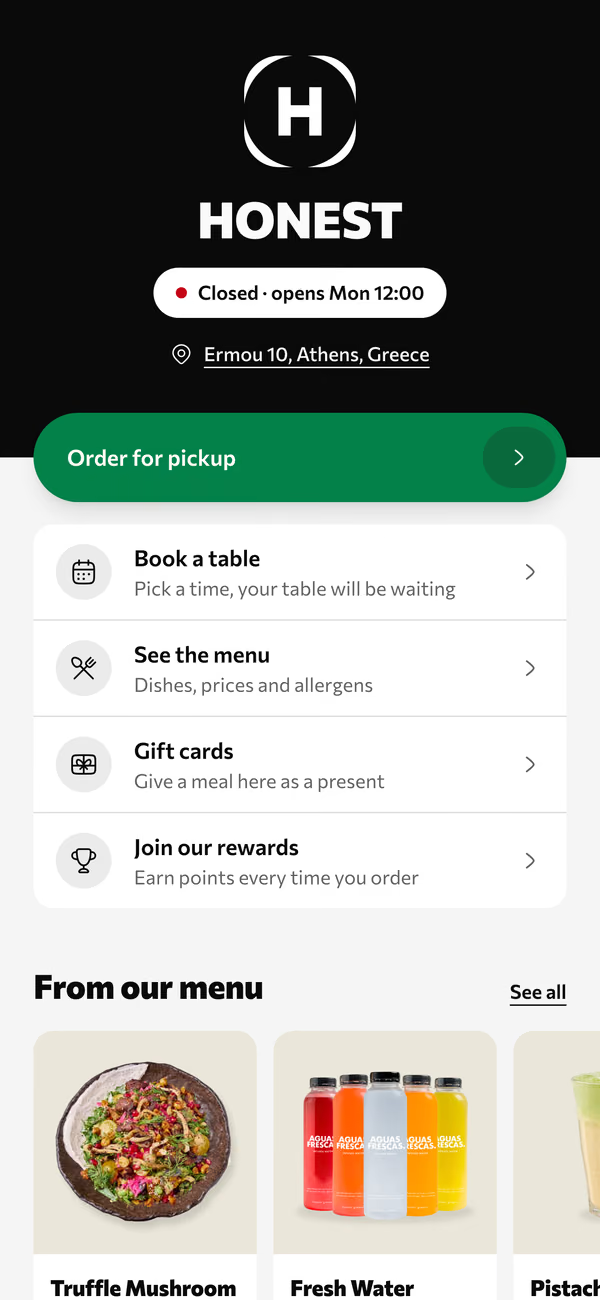
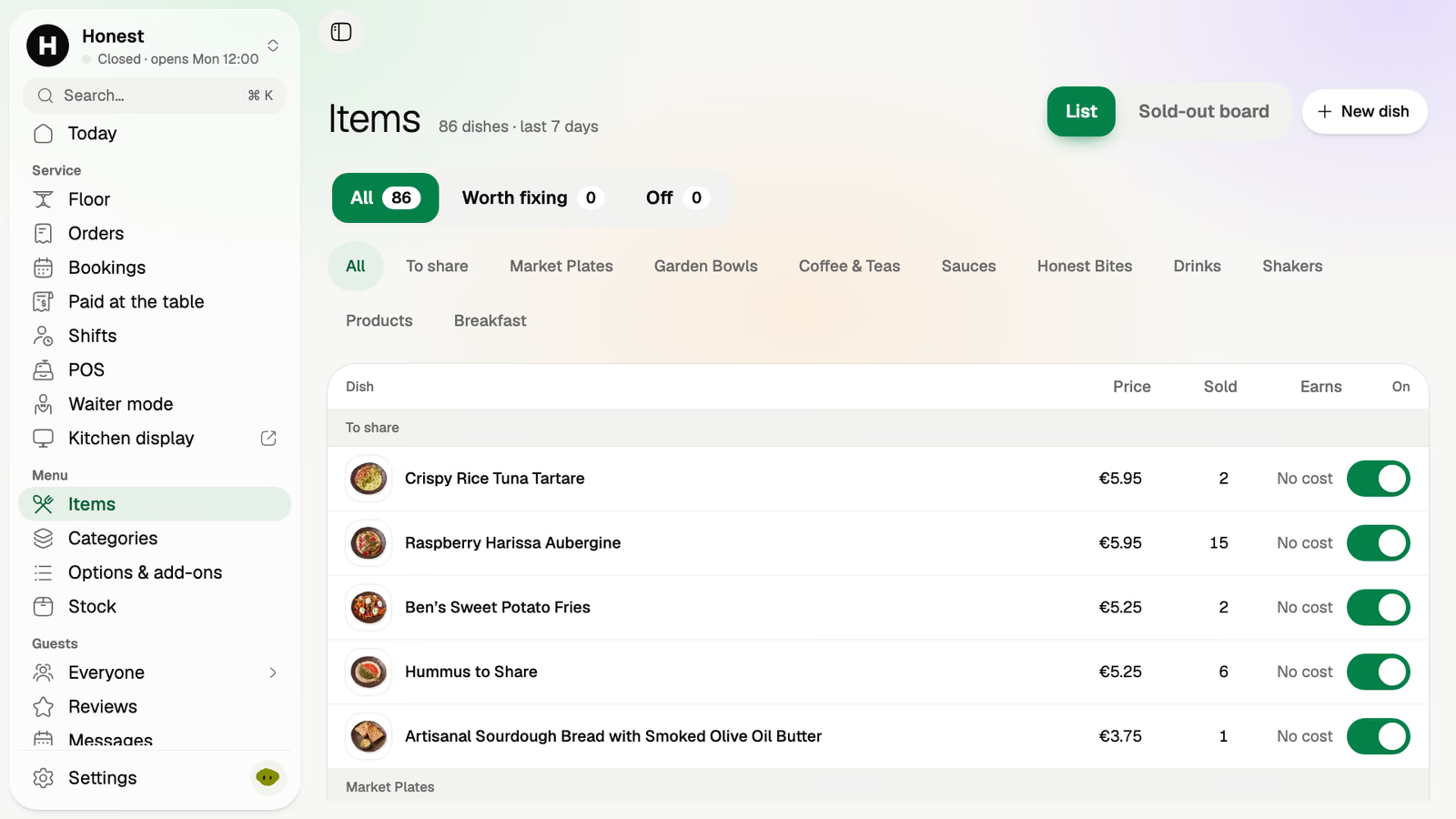
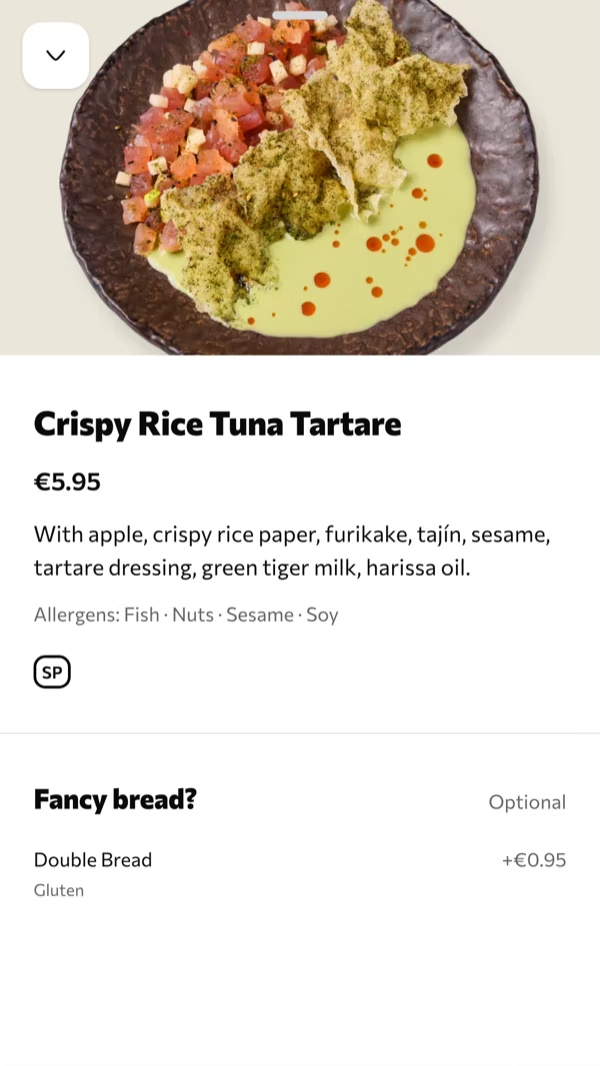
Volio’s QR menu opens in the browser with no app: photos, allergens, filters, search, and the menu in the guest’s language. From the same live menu it makes the paper, as table menus, posters and table tents, and the back office tells you when a printed one is out of date.
Every venue starts with a card and 30 days of Pro, free. Cancel any time and the menu stays on Volio behind its QR codes, in guests’ languages, free. Paper menus are part of the Essential plan: see the plans and prices. The home page shows what guests see and the back office.
Nothing above comes from Volio: every number is from the sources it links. Volio launched in October 2026.
Sources
Checked on 12 October 2026.
- Restaurant Business, “Customers really don’t like QR code menus”, 21 June 2022 (Technomic May 2022 Omnibus consumer survey): restaurantbusinessonline.com
- Toast, “How Guests Really Feel About QR Code Menus (Survey Data)”, 13 November 2024: pos.toasttab.com
- Tan and Netessine, “At Your Service on the Table: Impact of Tabletop Technology on Restaurant Performance”, Management Science 66(10), 2020: doi.org/10.1287/mnsc.2019.3430