Volio
VolioTable turnover rate: formula and what counts as good
Table turnover rate is parties served divided by tables in one service. No benchmark fits every room: a good rate beats your own last four Fridays.
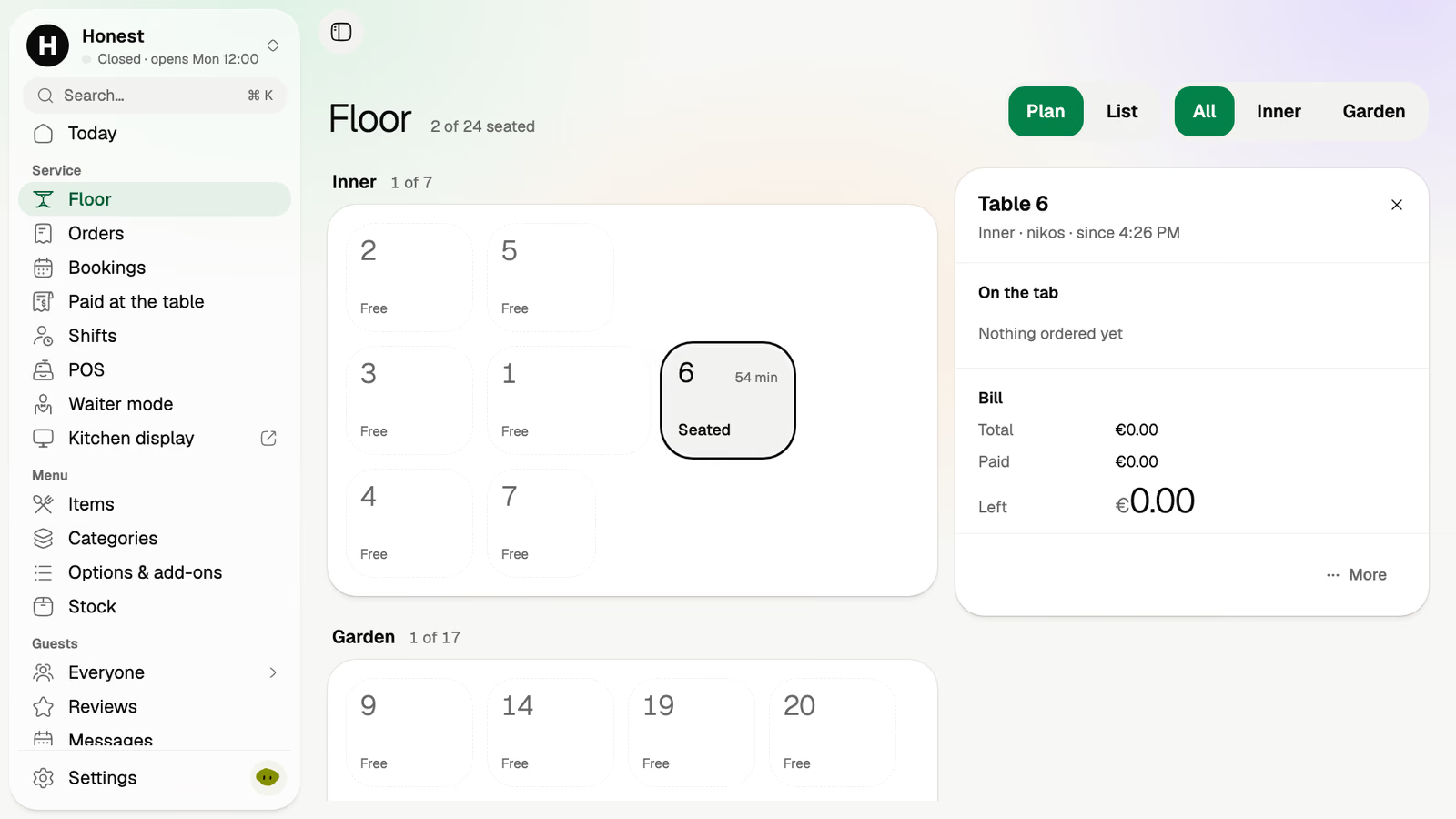
Table turnover rate is how many parties each table serves in one service. Divide the parties you served by the number of tables: 30 parties on 12 tables is a rate of 2.5. No benchmark fits every room, and the two quoted below cite no source, so a good rate is one that beats your own last four Fridays while the average bill holds.
The formula
Table turnover rate = parties served ÷ tables in use, for one service.
Keep one more number beside it: average minutes seated, from the moment a party sits down to the moment the bill is settled. When the rate drops, the minutes show where the time went. The minutes before the order and after the last plate are the ones QR ordering and pay at the table are aimed at.
Three rules keep the rate honest.
- Count parties, not guests. A table of six and a table of two are one turn each.
- Count the tables you opened. If the back section was closed, leave it out.
- Keep the period fixed. Friday dinner from 6 pm to 11 pm, every week, or the weeks cannot be compared.
A worked Friday night
Take a room with 12 tables, open for dinner from 6 pm to 11 pm. That is 300 minutes. The till shows 30 bills for the night.
30 parties ÷ 12 tables = 2.5
Now check it from the other side. Say a party sits for 95 minutes on average, and a table then stands empty or half-cleared for 25 minutes before the next party is seated. One full cycle is 120 minutes.
300 minutes ÷ 120 minutes = 2.5
The second sum is the useful one, because it shows what ten minutes are worth. Take ten minutes out of the cycle, from 120 to 110, and the rate goes to 2.7. Across 12 tables that is 32 or 33 parties in place of 30.
Those two or three parties exist only if somebody is waiting at the door. On a wet Tuesday with four tables empty all night, a faster turn buys nothing, and hurrying people out costs you the dessert.
What a good rate is, and why benchmarks do not settle it
Benchmarks are easy to find. The booking company resOS writes of “family restaurants averaging a rate of 3 during dinner”. The restaurant software company Qamarero gives 2 to 3 turns for casual dining and 1 to 2 for fine dining in an evening. As of October 2026, neither page cites a source for its figures.
Even a sourced average would not settle it. The rate depends on how long your service runs, how big your parties are, how many courses you sell and how you take bookings. A tasting menu with one sitting has a rate of 1 by design, and that is a full, good night.
So a good rate is one that beats your own recent Fridays while the average bill holds. Write both down each week. A table that turns faster and spends less has not made you money.
Where a table loses time
Guests should eat at their own pace. The minutes worth chasing sit on either side of the meal, in three places.
- Before the order. The party is seated and nobody has come. Menus arrive, then a wait, then drinks, then another wait for the food order.
- After the last plate. They ask for the bill, the bill comes, the card machine comes, and four friends work out who had the second bottle.
- After they leave. The table sits with glasses on it because nobody saw them go, or the host does not know it is free.
Measure before you change anything. Pick five tables next Friday and write down four times for each: seated, order in, bill asked for, table reset. One night shows you which of the three gaps is yours. On a night when you are a waiter down, all three grow, and the post on running a short-staffed restaurant starts there.
What research says about ordering at the table
One peer-reviewed study measured it. Tan and Netessine, in Management Science in 2020, studied a restaurant chain that brought in tabletop devices in stages, which let them compare service with and without the devices. Their abstract reports sales per check up by approximately 1%, meal duration down by close to 10%, and sales per minute up by approximately 11%. Staffing levels did not change.
The devices sat on the tables of one chain. A QR code and a guest’s own phone is a different set-up, and the paper does not test it. Take it as evidence that ordering from the table can shorten a meal without shrinking the bill at that chain, and no promise of 10% in your room.
What Volio shows you
Volio does not calculate a turnover rate, so the division stays on your napkin. What it shows is the minutes: the floor plan has who is seated at each table and for how long, and the back office has takings by day and by hour.
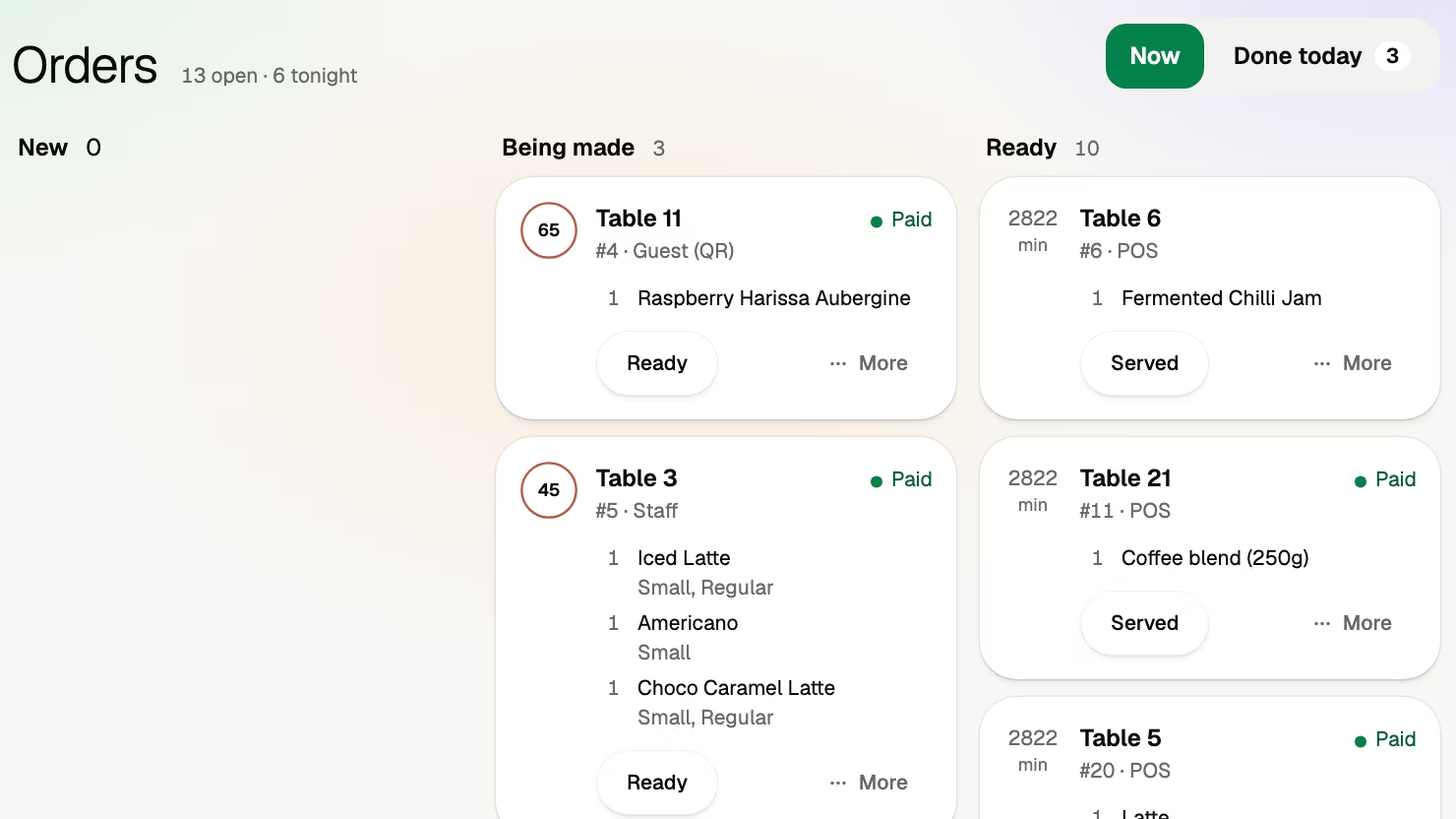
The first two gaps are where its guest side sits. Guests order and pay from their phone, and they settle the bill when they are ready to go. What that costs a venue is in the cost of a QR ordering system. Volio makes no claim about minutes saved in your room.
The floor plan is part of what the team sees, and every plan starts with 30 days of Pro, free.
Sources
Read on 12 October 2026.
- Tan and Netessine, “At Your Service on the Table: Impact of Tabletop Technology on Restaurant Performance”, Management Science 66(10), 2020: pubsonline.informs.org
- resOS, table turnover rate: resos.com
- Qamarero, table turnover rate: qamarero.com